VALORANT Champions Shanghai Group Stage Day 7
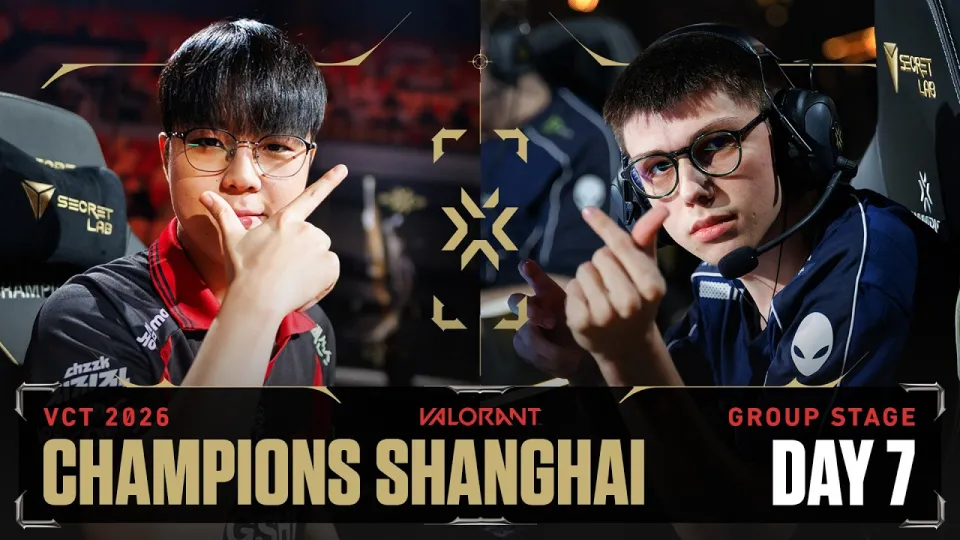
Video: VALORANT Champions Shanghai — Group Stage — Day 7
You can order the same kind of articles for your own video to boost it on YouTube and Google. Just message the Telegram bot @sat_sit_bot. The bot writes and publishes the articles itself (with your YouTube video embedded) on popular topical websites (no ads). Your first 50 articles are free.
· based on the channel VALORANT Champions Tour
Key takeaways
- VALORANT Champions Shanghai runs September 24 to October 18, with 16 teams from Americas, CN, EMEA and Pacific.
- Day 7 of the group stage is the seventh broadcast day of the event, published by the VALORANT Champions Tour channel on October 1.
- The tournament crowns the 2026 VALORANT World Champion — the biggest trophy of the VCT year.
- Two Masters events in 2026 already produced two different champions, setting up Shanghai as the tiebreaker.
- Viewers flagged repeated technical pauses during the Day 7 broadcast, a recurring talking point in the chat.
VALORANT Champions Shanghai is the 2026 world championship of the VALORANT Champions Tour, running from September 24 to October 18 with 16 teams from the Americas, CN, EMEA and Pacific. Group Stage Day 7 is the seventh broadcast day of that stage, streamed by the VALORANT Champions Tour channel on October 1 and packed with elimination stakes, technical pauses and region-versus-region arguments. Live brackets, schedules and clips are posted through the official VALORANT Esports account on X, which is the fastest place to confirm results and upcoming matches.
What VALORANT Champions Shanghai actually is
Shanghai is the season-ending world championship, and everything on the VCT calendar points here. The event description frames it plainly: every era meets a challenger, and in 2026 the shift is already visible — new contenders have arrived, expectations have been broken, and two separate Masters events each crowned a different champion. Shanghai is where those threads converge.
The format details that matter for following the group stage:
- Sixteen teams qualify across four regions — Americas, CN, EMEA and Pacific.
- The group stage runs in the first half of the event window, with the bracket narrowing toward playoffs.
- Only one team leaves as the 2026 VALORANT World Champion.
- The event is staged in Shanghai, chosen in part for its mix of history and modernity — a theme the broadcast leans into.
Day 7 sits deep enough into the group stage that every map has table implications: teams are either locking playoff seeds, fighting for survival, or playing spoiler. That is why the broadcast runs long and why the stakes read differently from an early-week show.
Reading the Day 7 broadcast
The Day 7 VOD is a full-length production rather than a highlight reel, so the practical way to watch it is by intent. If you want results, skip to the post-map interviews and the analyst desk segments, which restate scores and standings. If you want to study play, the map veto and pistol rounds are where set strategies show up first — and where the gap between prepared and improvised teams becomes obvious.
The broadcast itself is the primary source: it carries the official observer feed, the caster calls and the desk analysis. Because the stream is long, community viewers built spoiler-free timestamp lists in the comments so people could watch matches without knowing outcomes in advance. That practice is worth copying if you plan to watch delayed — the video is a VOD, not a live-only product, and the full run stays available on the channel.
The tech pause problem
The most repeated complaint around Day 7 was the volume of technical pauses. Viewers counted an "endless series" of them, and at least one timestamp list had to be edited because a pause shifted the timing.
Technical stoppages are not unique to VALORANT, but their density in a single broadcast day matters for three reasons:
- Momentum: pause-heavy maps break the rhythm of a team's economy and reset momentum in ways players cannot practice for.
- Broadcast trust: viewers who plan around a schedule lose confidence when the advertised timing slips repeatedly.
- VOD usability: every pause pushes timestamps, which is exactly why spoiler-blocker lists need maintenance.
For anyone watching the replay, the takeaway is simple: expect dead air, and use chapter markers or community timestamps rather than raw scrubbing.
The CN region debate, explained
The sharpest discussion around Day 7 concerned the CN region's level. Critics argued that Chinese teams lost rounds that should have been unlosable — eco upsets, 5v2 collapses — and that their utility usage looked rigid once default set plays broke down. Others pushed back that stronger teams in other regions missed the event entirely, so the sample is not a fair measure of regional strength.
Both claims can be true at once, and the group stage is where that tension is easiest to see:
- Execution under pressure: losing anti-eco rounds is usually a discipline problem, not an aim problem.
- Adaptation: teams that only win on scripted executes struggle when opponents adjust after the first few rounds.
- Sample size: a handful of group-stage maps is thin evidence for judging an entire region.
A more useful read is structural. CN rosters arrive with strong mechanical skill and heavily rehearsed setups; the gap at the top of international play shows up in mid-round calling and in how quickly a team abandons a plan that is being countered. That is a coaching and experience issue, and it is exactly what a deep Shanghai run would fix.
Individual moments that stood out
Beyond the standings, Day 7 produced the kind of micro-moments that make VODs worth rewatching. One widely shared clip came on Split, where a Yoru clone briefly looked like it was helping hold a site — a piece of utility misread that turned into comedy rather than a highlight. Pro-level utility is usually invisible; when it goes wrong in a readable way, the clip travels.
Veteran names also drew attention. A chant pushing for one long-tenured pro to run for president is the sort of affection that only builds over years of international appearances, and it underlines how much of the VCT audience follows players as much as teams. These moments do not change brackets, but they are why the full broadcast, not just the scoreboard, gets watched.
How to follow the rest of the event
Champions runs through October 18, and the group stage is only the filter. To keep up without relying on highlight channels:
- Follow the official X account for bracket updates and schedule changes.
- Check the VALORANT Esports news page for format explanations and official statements.
- Watch the main Twitch channel for live matches with the full observer feed.
- Use the VOD uploads on the VALORANT Champions Tour channel when a match airs outside your timezone.
Useful links
- VALORANT Esports on X — results, bracket and schedule updates
- VALORANT Esports on Facebook
- VALORANT Esports on Instagram
- VALORANT Esports on TikTok
- VALORANT on Twitch
Final thoughts on VALORANT Champions Shanghai
Day 7 showed the championship at its most compressed: playoff math, region arguments and broadcast hiccups all in one sitting. The tech pauses are a real production issue, but they do not erase what the maps revealed — teams with flexible mid-round structure are separating from teams that only execute. The CN debate will not be settled by one group stage, and it should not be; Shanghai is the place where that argument gets its fairest test. Follow the official VALORANT Esports X account for the bracket as it updates. This breakdown is based on the Day 7 broadcast published by the VALORANT Champions Tour channel.
Questions & answers
What is VALORANT Champions Shanghai?
It is the 2026 VALORANT world championship, the season-ending VCT event held in Shanghai from September 24 to October 18. Sixteen teams from the Americas, CN, EMEA and Pacific compete for the title of 2026 VALORANT World Champion.
Why were there so many technical pauses on Day 7?
The broadcast suffered repeated technical stoppages, which viewers noted throughout the stream and which forced community timestamp lists to be edited. The pauses stretched the runtime and disrupted the flow of individual maps, though the matches continued once issues were resolved.
Is the CN region really weaker than the others?
The group stage showed CN teams losing rounds they should have closed, especially anti-eco and 5v2 situations, and struggling once set plays were countered. Critics counter that strong teams from other regions did not qualify at all, so the sample is too small to judge an entire region.
Where can I watch the full Day 7 VOD without spoilers?
The complete broadcast is available on the VALORANT Champions Tour YouTube channel, and community viewers share spoiler-free timestamp lists in the comments. Expect to adjust those timestamps slightly, since technical pauses shifted the original timings.
Source: VALORANT Champions Shanghai — Group Stage — Day 7 · Markdown version